Quartermain's Journal
A History of Nightingale City
written by Amika Vanderbilt
The Druids are a curious folk—to the modern, enlightened eye, they come across as backwards and primitive, even savage. However, despite their general hostility towards modernity, we owe them much. For it is because of the Druids that Nightingale City exists at all—indeed, our fine city’s name comes from the Nightingale Inn, owned by former Chief Druid, Angharad Furniss, around which the city grew into the jewel of progress it is today. Ironically, despite their disdain for technology, the Druids are also who we must thank for the discovery of Portal magick. For it was their collaboration with the Hermetic Dr. John Dee that enabled the revival and stabilisation of the Portal at the ancient site of Boscawen-Un, upon which the Crystal Palace was built. Later, this same Portal would become what is now known as the First Transept.
The Academy of Arcane Sciences is Nightingale City’s only academic institution. Although it is a Hermetic institution, the Academy welcomes academics and scholars of any and all areas of interest. Despite the Academy’s storied pedigree, the Hermetics themselves have passed out of vogue. Once the darling of the Royal Court, they have largely been supplanted by the newer Calcularia. The Hermetics are now seen as dusty eccentrics rather than respected scholars, whose bizarre experiments and predilection for the occult bewilder and terrify. However they are viewed now, it cannot be denied that the Hermetics have made foundational contributions to science, magick, and Nightingale City itself. It was the Hermetics who first realised that it was possible to create stable connections to other Realms.Today, they use that same knowledge to maintain the Second Transept under the great Cathedral.
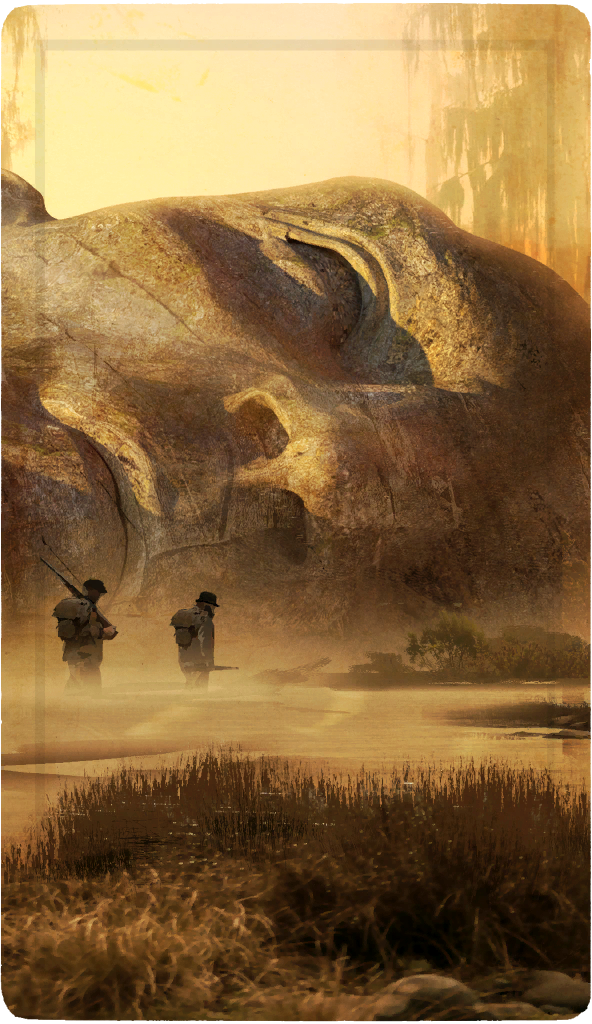
The Royal Cosmographical and Geoarcane Society was founded in 1828 by Jonathan Swift as a gentleperson’s club focused on exploration and discovery, operating out of The Diogenes Club.Today they are led by Allan Quatermain, an explorer of some renown and infamy. The Society attracts people from all walks of life and interest—not merely explorers, but also geographers, writers, soldiers, hunters, anthropologists, cartographers, spies, linguists, and diplomats. While their membership may differ in trade or area of focus, all are united in a common interest and passion for mapping out the Realms and understanding their interrelations. Since the 1850s, the Society has had a profitable sideline as a touring company, supplying guides, equipment, bearers, maps, and protection for others looking to delve into the Realms. The money from these tamer expeditions fund their members’ wider expeditions to more dangerous demesnes.
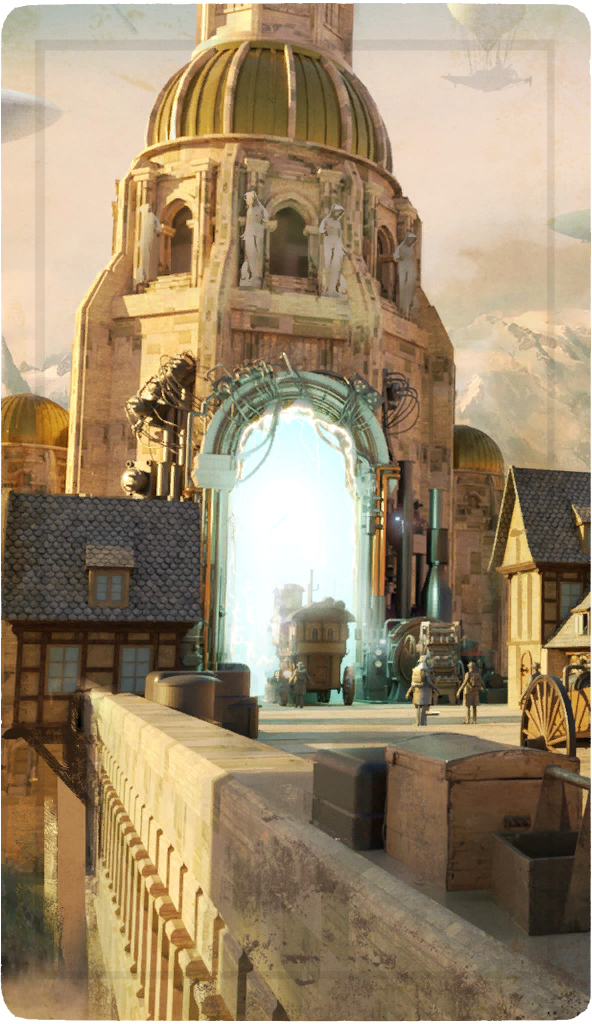
Established in 1845, The Calcularia is an organization of scientists, engineers, mathematicians and philosophers formed by Lady Ada Lovelace and Charles Babbage. While their scientific achievements are numerous, chief among them is their creation of the Fourth Transept Portal, the largest and most stable Transept in Nightingale City. In comparison to their counterparts, the Calcularia have a measured, more scientific approach to magick. Magick is a natural phenomena, and just like all other phenomena, it can be analyzed. If something can be analyzed, then it can be understood. And if something is understood, then it can be replicated. The Calcularia enjoys a close relationship with The Company, of which Lady Lovelace is a major shareholder. Because of this relationship, the scientists who work in the Calcularium and Astrarium enjoy easy access to all the inter-Realmic resources their experiments may require.
The North Transept Trading Company (otherwise referred to more simply as the NTTC or The Company) was established in 1850 by Lady Ada Lovelace and the McIntosh family. Their first order of business was to fund the construction of the Fourth Transept Portal, a tremendous undertaking that utilized the finest minds and materials that could be found in Earth and the Realms. The opening of the Fourth Transept paved the way for Nightingale’s economic prosperity. Access to the first three Transepts are controlled by semi-religious organizations, and in any case are too small to allow anything more than piecemeal trade with the Realms to trickle through.The Fourth Transept opened the doors of commerce between the city and the Realms, allowing vast amounts of raw resources, goods, and manpower to travel back and forth more easily.
The Nomadic Order of Sages are a loose group of magickians who follow the principles of the Nomad. Not much is known about the Nomad, a mysterious magickian who suddenly appeared in 1808 and just as suddenly disappeared one year later. Though her time in Nightingale City was brief, her impact was immense. Her magickal prowess was unmatched, and under her direction the Third Transept was built. Her acolytes, calling themselves Sages, became powerful magickians of their own right—they are most known for using their so-called ‘contractual magick' to defeat Napoleon’s armies in Spain and Russia while in the service of His Majesty’s Regiment. Typically, the Sages keep to the Temple of the Nomad. Though they answer to the Regency, there are whispers that their push for more ‘egalitarianism’ in Nightingale are a cover for more seditious intent.